Certification
Get Farm-to-Chef certified
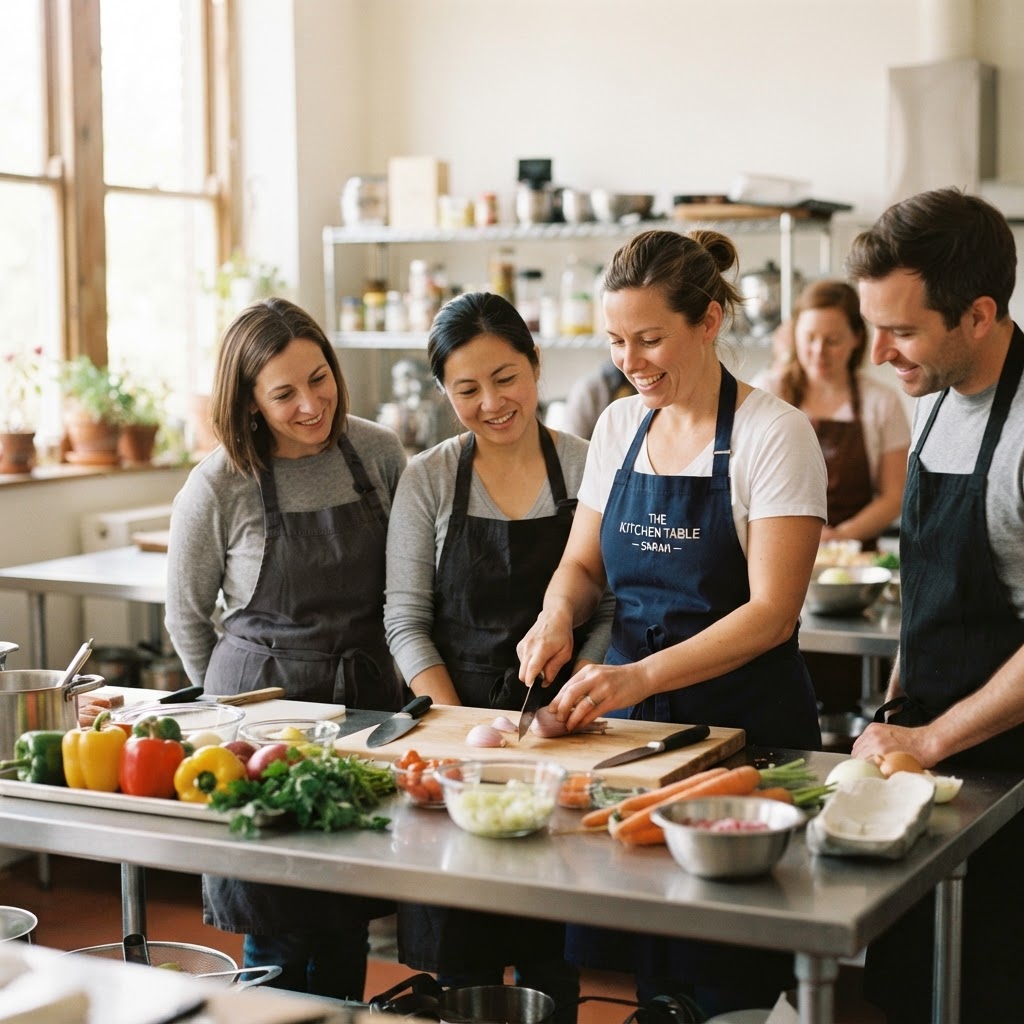
Train with the Travel Villa Kitchen education program and earn the food-safety and handling credentials institutional buyers ask for.
Start certificationA school district, hospital, or restaurant group cannot buy from your farm until five gates are cleared: food-safety documentation, volume, standardized pack and grade, cold chain, and audit-ready invoicing. FARM2CHEF scores your farm against all five, closes the gaps, and pools your harvest with other growers to hit institutional volume.
Free assessment. 12 questions. No account required.
| Food Safety Documentation | 14/30 |
| Volume & Aggregation | 12/20 |
| Pack, Grade & Traceability | 11/20 |
| Cold Chain | 15/15 |
| Business & Invoicing | 10/15 |
A farm's harvest is decided the day it's picked. The Field Board is the public coordination layer that keeps that day from going short — one place where growers post what's ready, chefs reserve demo slots, volunteers claim harvest shifts, and programs hire paid kitchen and teaching roles.
Nothing here requires an account. Post a need or claim a slot in a couple of minutes; the board handles the confirmations, the calendar, and the produce credit behind it.
Post a demo, a harvest crew, or a paid role in minutes. Your listing reaches Houston chefs, cooks, and volunteers already looking for local supply — with no marketplace fees and no listing cost.
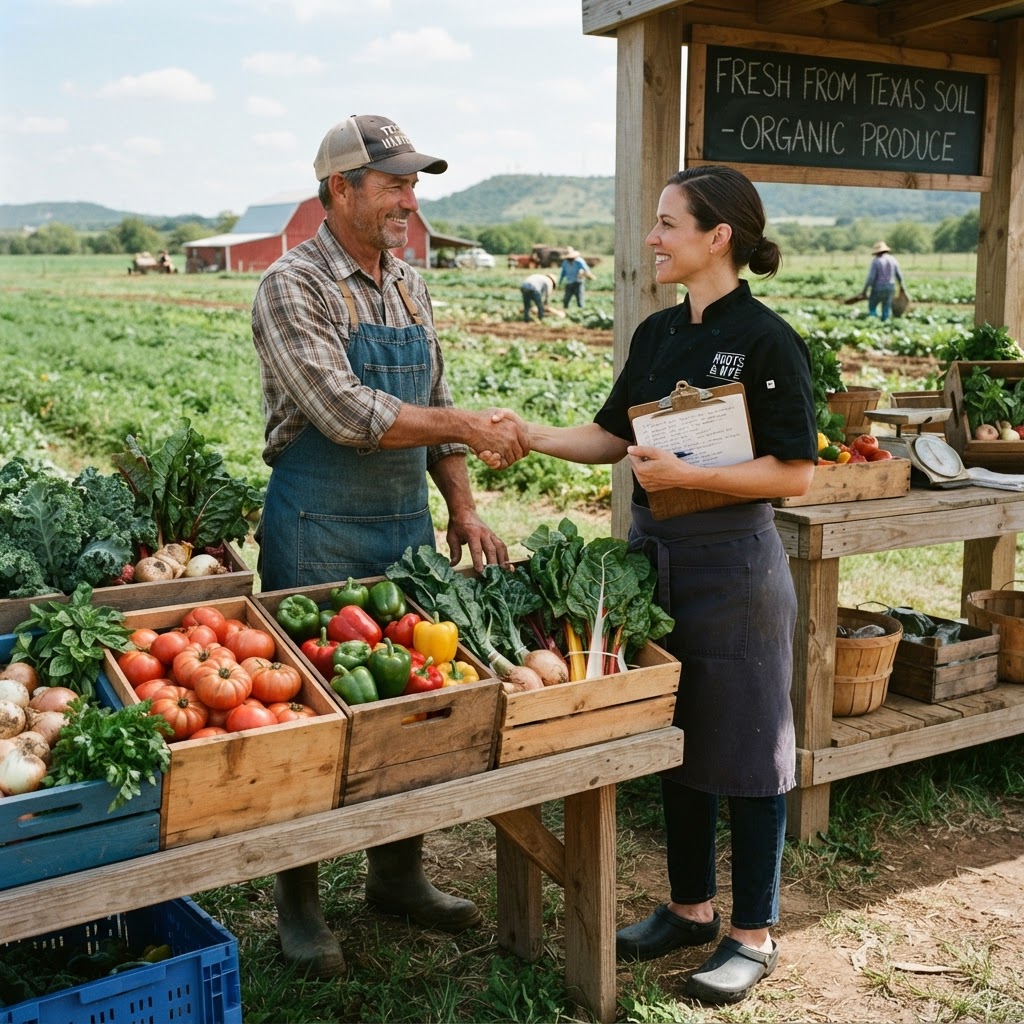
Source directly from growers before the harvest is picked. Reserve demo slots, meet the farmer, and build a standing relationship with the people who grow your ingredients.
Trade a few hours at harvest for produce credit you can spend on the same farms. Every confirmed slot earns credit at the rate the farm sets, tracked to your email.
Demos, garden crawls, and youth cooking classes put fresh food in front of Third Ward and Fifth Ward neighbors — and paid roles keep that work inside the community.
Produce credit is tracked per volunteer email and spendable at the farm that issued it.
Get notified when farms post produce demo opportunities. We'll email you with the farm, event, date, and produce — plus reminders 7, 3, and 1 days before each event so you don't miss a slot.
Every institutional buyer screens on the same five things. Each gate below is scored, weighted, and tied to the actual federal rule or cost it comes from. Nothing here is our opinion.
What buyers ask for: a written plan, test records, and ideally a GAP certificate.
Farms averaging $25,000 or less in annual produce sales are not covered by the FDA Produce Safety Rule — and the qualified exemption applies below $500,000 in total food sales.
FDA, Exemptions Relevant to Produce FarmsWhat buyers ask for: consistent weekly poundage across a defined season, not a single harvest.
USDA food hub modeling puts wholesale breakeven at roughly $1.21 million in annual sales and viability at about $2.4 million — which is why pooling, not solo selling, is how a small farm reaches this channel.
USDA Rural Development, Running a Food Hub Vol. IIIWhat buyers ask for: a declared pack configuration, a grade standard, and a scannable case label.
A conforming PTI case label carries a GTIN-14 under application identifier (01), a lot code under (10), and a 4-digit voice pick code.
Produce Traceability Initiative, Case Label Best PracticesWhat buyers ask for: logged temperature at pack and at delivery, not a claim about a cooler.
The FDA Food Code requires time/temperature control for safety food to be held at 41°F or below — which is why post-harvest cooling, refrigerated transport, and logged temperatures at pack and at delivery are what an audit asks to see.
FDA, Food Code 2022What buyers ask for: W-9, EIN, certificates of insurance, and an invoice that survives an audit.
USDA procurement guidance instructs that respondents must meet stated minimum liability insurance and workers' compensation requirements.
USDA FNS, Procuring Local Foods for Child Nutrition ProgramsThe Institutional Readiness Score is a screening index built from the federal rules, audit standards, and procurement requirements below. Each scored answer, its point value, and the document it comes from are listed here so you can check any part of your own score against the source.
Rubric v1.0 · sources verified October 2, 2026
The Produce Safety Rule requires a covered farm to have at least one supervisor or responsible party who has completed food safety training at least equivalent to a standardized, FDA-recognized curriculum (21 CFR 112.22(c)). The Produce Safety Alliance course is that curriculum.
The Produce Safety Rule requires records for training, agricultural water, and biological soil amendments, and USDA GAP&GHP audits verify a documented food safety plan and its monitoring records on site.
The Produce Safety Rule sets microbial water quality criteria and biological soil amendment controls, with records kept to demonstrate compliance for the last 12 months.
Farms averaging $25,000 or less in annual produce sales are not covered by the Produce Safety Rule, and the qualified exemption applies below $500,000 in total food sales — which is why exemption status scores below a verified audit. Certified tiers are verified through USDA GAP, Harmonized GAP, or a group audit under a managed quality management system.
Institutional contracts specify a committed weekly quantity over a defined delivery period. Federal procurement guidance for child nutrition programs awards on the stated volume and season, not on a single harvest.
The same guidance establishes those contracts months ahead of delivery and across a full school or fiscal year, so consecutive weeks of supply are part of the requirement, not a preference.
USDA food hub research models the wholesale channel at hub scale — roughly $1.21 million in annual sales to break even and about $2.4 million for viability — which is why aggregated supply, not solo volume, clears this gate.
USDA grade standards exist so that large-volume buyers — grocery, military, institutions — can transact in a common language. Contracts specify case weight, count, container, and grade standard per crop.
FDA's Food Traceability Rule (FSMA Section 204) requires lot-level records for foods on the Food Traceability List; the compliance date was January 20, 2026, with FDA proposing a 30-month extension to July 20, 2028. A conforming Produce Traceability Initiative case label carries a GTIN-14 under application identifier (01), a lot code under (10), and a voice pick code.
The FDA Food Code requires time/temperature control for safety food to be held at 41°F or below. Full points require logged temperature at pack and at delivery, because that log is the evidence a buyer's audit accepts.
An institution reporting payments to a vendor is required to hold a taxpayer identification number for that vendor, so a payable supplier file starts with Form W-9 and an EIN.
USDA procurement guidance requires respondents to meet the stated minimum liability insurance and workers' compensation requirements. In Texas most private employers may choose whether to carry workers' compensation, so buyers verify coverage by certificate.
Payment under an institutional contract runs through accounts payable against an invoice that carries the remittance details, so invoicing is scored as a readiness item rather than an afterthought.
The score is a screening index built from these sources. It is not a certification, an audit finding, or a legal determination — it reports whether the documentation a buyer screens on is in place today.
Texas Local Food for Schools allocation administered by the Texas Department of Agriculture, spent through competitive state procurement.
USDA AMSFederal micro-purchase threshold. Below it, an institution can buy direct from a single farm with minimal procurement friction.
USDA FNSFederal simplified acquisition threshold. Above it, formal competitive procurement is required.
USDA FNSHow far ahead institutional produce contracts are typically established, which is why crop planning beats harvest listing.
USDA FNSThe budget exists and it recurs annually. The constraint is that almost no local grower can be written onto the contract.
Train with the Travel Villa Kitchen education program and earn the food-safety and handling credentials institutional buyers ask for.
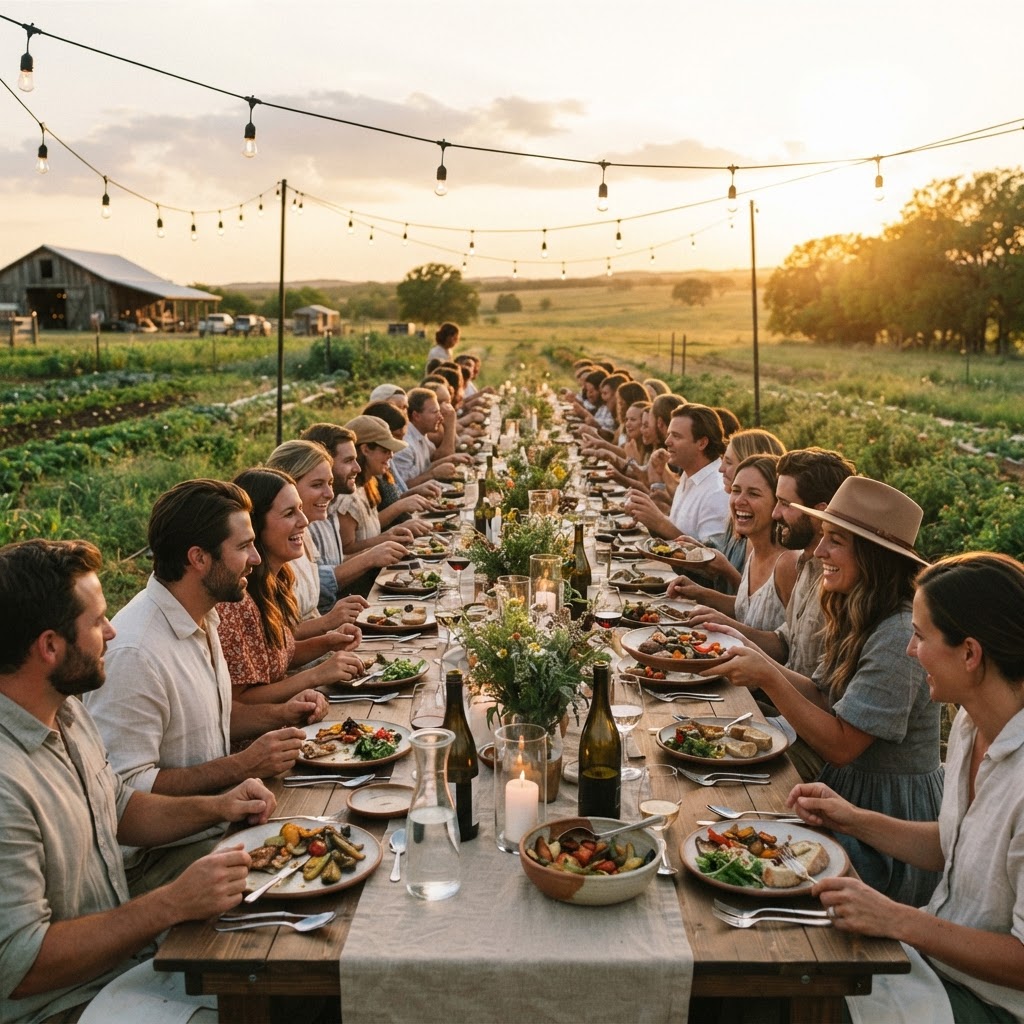
Start certificationSit down at a table set by the growers in this network — a seasonal dinner where the supply chain shows up on the plate.
See upcoming dinnersSupply chefs and kitchens through the VK Culinary sourcing network, with purchase orders, terms, and payment support built in.
Become a sourcing partner